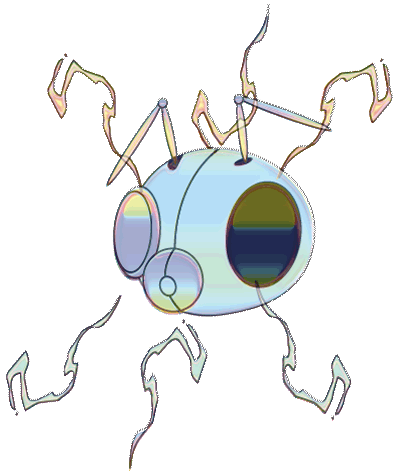
“In The Treaty of Finsbury Park 2025, we are catapulted several years into the future where all the species of the park have risen up to demand equal rights with humans. After much unrest, it has been agreed that a treaty will be drawn up, designating these rights, but first humans must learn to better relate to and understand non-humans so they can cooperate better together. Thankfully there has been a new invention – The Sentience Dial – which allows humans to tune into all the flora and fauna of Finsbury Park.”
WHAT’S ON NOW: THE TREATY SIGNING
The Treaty of Finsbury Park 2025 is a collaborative project that depicts the story of the dawning of interspecies democracy. It’s a new era of equal rights for all living beings, where all species come together to organise and shape the environments and cultures they inhabit, in Finsbury Park (and urban green spaces across the UK, the world, and beyond!) Like many urban parks, Finsbury Park is fraught with environmental issues from noxious gasses and traffic noises to governance struggles and financial sustainability. If colonial systems of dominance and control over living beings continue we all face an apocalypse.
Based around a set of LARPs – or live action role play games – the Treaty of Finsbury Park 2025 is played from more-than-human perspectives to encourage the blooming of a bountiful biodiversity and interspecies political action. Think like a dog, bee or even grass and help change the way we all see and participate in our local urban green spaces forever.
There are 3 parts to the story.
Part 1. 2022. The Interspecies Assemblies – these are games where everyone gets to plan the Interspecies Festival of Finsbury Park 2023 – an event which will celebrate the drawing up of the treaty itself.
Part 2. 2023. The Vote – once artists have had a chance to gather everyone’s input they’ll present 3 proposals for the Interspecies Festival and everyone will be invited to choose the one they want to participate in.
Part 3. 2023. The Interspecies Festival of Finsbury Park – all the species of Finsbury Park will be invited to join the festival in Summer 2023.
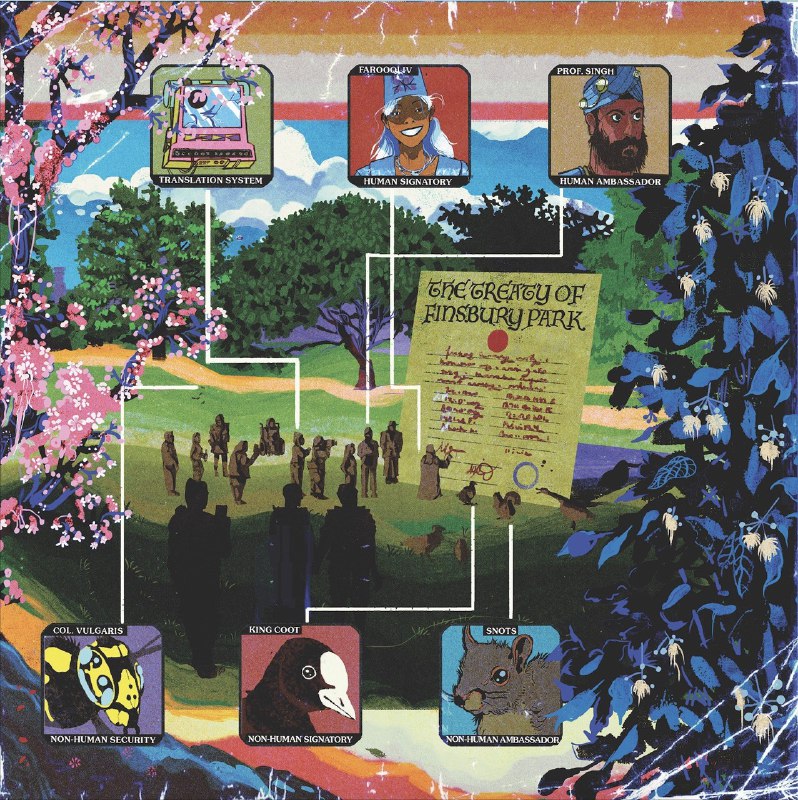
The Interspecies Festival will be a gathering for all species to showcase their cultures, their interests and talents. Like a World’s Fair or an Olympic Games, it will be a place of discovery, marvels and broadened horizons. But it can only be planned if you help all the species of the park present their ideas.
By planning the Interspecies Festival together, human people from the locality and around the world will build empathy pathways to other beings. They will learn about what matters to them and their habitats. They will explore what it would mean to acknowledge the equal rights of more-than-human beings to the same range of freedoms they expect for themselves. They will draft the Treaty and they will decide how to connect even more deeply with all the species of the park through a festival for all. From September 2022 scannable hoardings will wrap the Furtherfield Gallery in Finsbury Park with an exhibition featuring stories about the new knowledge and relationships formed by assembly members for the benefit of biodiversity locally and world wide.
In the PUBLIC game of ‘Interspecies Assemblies’, human players will be partnered with a mentor representing one of 7 species based in Finsbury Park. These include a tree, a bee, a goose, grass, a squirrel, a stag beetle and a dog. Players will be tuned into the mentor’s needs and experiences1 and will then represent them at a series of online assemblies being held to choose the events and the location in the park for the first ever Interspecies Festival of Finsbury Park.
PLAY THE INTERSPECIES ASSEMBLIES GAMES ONLINE.
RECEIVE UPDATES ON THIS PROJECT.
In Spring 2022 The Interspecies Artists Forum will be commissioned to design a set of festival activities for 3 biodiversity habitats based on everything learned and proposed through the Assemblies. For example, the dogs might lead on the Sniffathon followed by Barkeoke, Name that Honk for the Geese, and the Squirrels present the Antique Nut Show. Different activities for different habitats will then be presented as immersive scenes for mobile phones for a public vote.
There will be a PUBLIC vote to decide which biodiversity habitat in the park will host the festival, based on the interspecies activities designed for it. We already know that the bees are abuzz for the wildflower meadows, the stag beetles dig the ancient forest, while the squirrels squeak for the new forests. But the winning habitat will need to appeal to all the species. From April 2022 scannable hoarding will wrap the Furtherfield Gallery in Finsbury Park. Everyone – human or otherwise – is invited to attend, scan, and explore activities in the proposed habitats and decide where the Interspecies Festival should be held to best serve the bountiful biodiversity of the park.
The final Interspecies Festival activities will take place in the chosen habitat to be further developed and enjoyed by the park’s public in the summer. These will take place alongside the presentation of the draft Treaty for discussion by all the human and more-than-human people of the park.
Read the concept paper here.
RECEIVE UPDATES ON THIS PROJECT.
The Treaty of Finsbury Park 2025 is a major new project exploring new ways to build empathy pathways to non-human lifeforms through play.
It represents a major undertaking to do long-term work exploring how an arts organisation based in the heart of an urban green space can support a deeper understanding of that green space and ALL its inhabitants. Beginning in 2020 and spanning a minimum of 5 years, the work was originally developed in a collaboration between Furtherfield and The New Design Congress. The first 3 years are being supported by CreaTures Creative Practices for Transformational Futures. CreaTures project has received funding from the European Union’s Horizon 2020 research and innovation programme under grant agreement No 870759. The content presented represents the views of the authors, and the European Commission has no liability in respect of the content.
Artistic Direction by Ruth Catlow
Concept by Cade Diem and Ruth Catlow
Visual design by Cade Diem
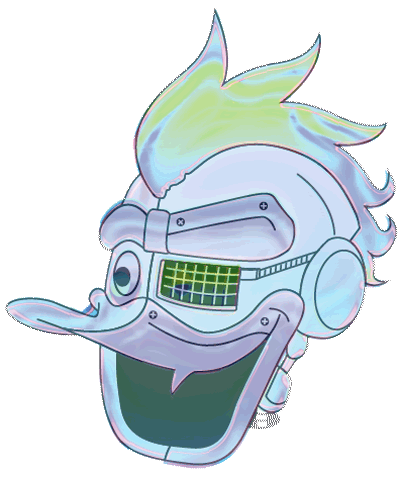
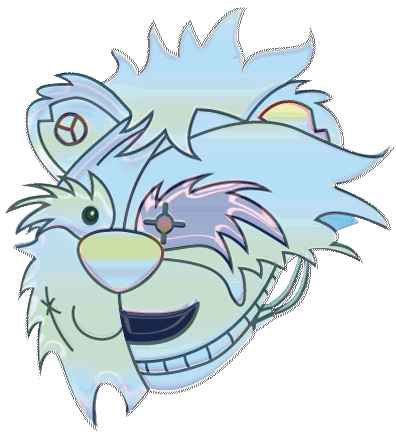
Illustrations by Sajan Rai
LARP Design and Hosting by Ruth Catlow, Bea Xu and Max Dovey
LARP Player Assistance by Yejide Cordner
LARP Player Support by Lekey Leideker and Tanya Boyarkina
Writing by Ruth Catlow and Dr Charlotte Frost
Music by Matt Catlow
Digital Mask animation by PopulAR
Research by CreaTures, stewarded by Dr Lara Houston and Dr Ann Light
Production support for prototype LARPs by Tanya Boyarkina
Outreach for prototype LARPs by Pita Arreola
Thanks to our first players: Shawn, Carien, Anne, Tom and Ricard.
Special thanks to Ricard, Finsbury Park Ranger for introducing us to all the different lives of the park
Thanks to all online Interspecies Assemblies players – you know who you are – 🐶 WOOF!
In a series of six online sessions we practice and discuss the social skills, values, and priorities that are central to the Hologram model. Each person leaves the course empowered to assemble and participate in their own Hologram.
Pragmatics: six consecutive Tuesdays, starting September 8 and finishing on October 20th. 6-9pm London Time, [1-4pm Thunder Bay (Eastern Standard Time)], and [1-4am Singapore Time], on Zoom.
The course is fully booked but find out here how you can get involved.
The Hologram is a mythoreal viral distribution system for non-expert healthcare, practiced from couches around the world. The premise is simple: three people – the ‘Triangle’ – meet on a regular basis, digitally or in person, to focus on the physical, mental and social health of a fourth – the ‘Hologram’. The Hologram, in turn, teaches these listeners how to give and also receive care. When they are ready, the Hologram will support them to each set up their own triangle, and so the system expands. This social technology is based on the experimental care models developed in the Social Solidarity Clinics in Greece during the height of the financial and migration crisis. The result is the construction of a robust multidimensional health network, collectively-oriented social practices, and trust that can outlive capitalism. Its protocol ensures that all caretakers are cared for, and regards properly supporting someone else’s wellbeing as therapeutic in itself.
In the second ever Hologram course, people from all over the world are invited to study and practice what it means to ask for help. In We Must Begin Again: Asking for help as a new world, participants will be guided through a process to remember together why and how to ask for support, and how to ensure that our supporters are supported.
As the racist, capitalist and patriarchal world crumbles around us, we invite people to design long-lasting systems for support and solidarity that can ensure that our species can outlast the coming social, economic and planetary emergencies. Participants in the course will experiment with how to organize and value the support they need to survive and thrive in the coming new world. We believe that destruction is making space for new beginnings and that we have no choice but to begin again. We see asking for help as a way of coming into a new world with humility, curiosity and interdependence with all beings.
We want to work together with you to remind ourselves what we have been forced to forget: how to be a cooperative, interdependent species. In this project, the person who articulates their needs and asks for support can take us to a whole new world.
Contact cooperativespecies@gmail.com if you need any further information or assistance.
Apply to join the course here.
Cassie Thornton is an artist and activist who makes a “safe space” for the unknown, for disobedience and for unanticipated collectivity. She uses social practices including institutional critique, insurgent architecture, and “healing modalities” like hypnosis and yoga to find soft spots in the hard surfaces of capitalist life. Cassie has invented a grassroots alternative credit reporting service for the survivors of gentrification, has hypnotized hedge fund managers, has finger-painted with the grime found inside banks, has donated cursed paintings to profiteering bankers, and has taught feminist economics to yogis (and vice versa). Her new book is available from Pluto Press called The Hologram: Feminist, Peer-to-Peer Health for a Post-Pandemic Future. She is currently the co-director of the Re-Imagining Value Action Lab in Thunder Bay, an art and social centre at Lakehead University in Ontario, Canada.
Lita Wallis is a youth worker, organiser, and informal educator based in London. Whether in work or her personal life, Lita has spent much of her time experimenting with different shapes of supportive relationships (eg. cooperatives, triangles, flows and webs.) She is still working on ways to build sustainable support networks that challenge isolating social norms, and then how to commit to them in a social context that is so hostile to putting down roots. Four years ago she and two friends made a lifelong commitment to The Tripod, a platonic support system, which aims to provide much of the financial, emotional and housing support that many people end up relying on couple relationships for. She hopes to bring some learning from this experience, plus some seeds of inspiration from her work with young people and her avid sci-fi habit, to set founding Hologram members fourth in good stead.
This course is supported by Furtherfield and CreaTures – Creative Practices for Transformational Futures. CreaTures project has received funding from the European Union’s Horizon 2020 research and innovation programme under grant agreement No 870759. The content presented represents the views of the authors, and the European Commission has no liability in respect of the content.

 Furtherfield content is published