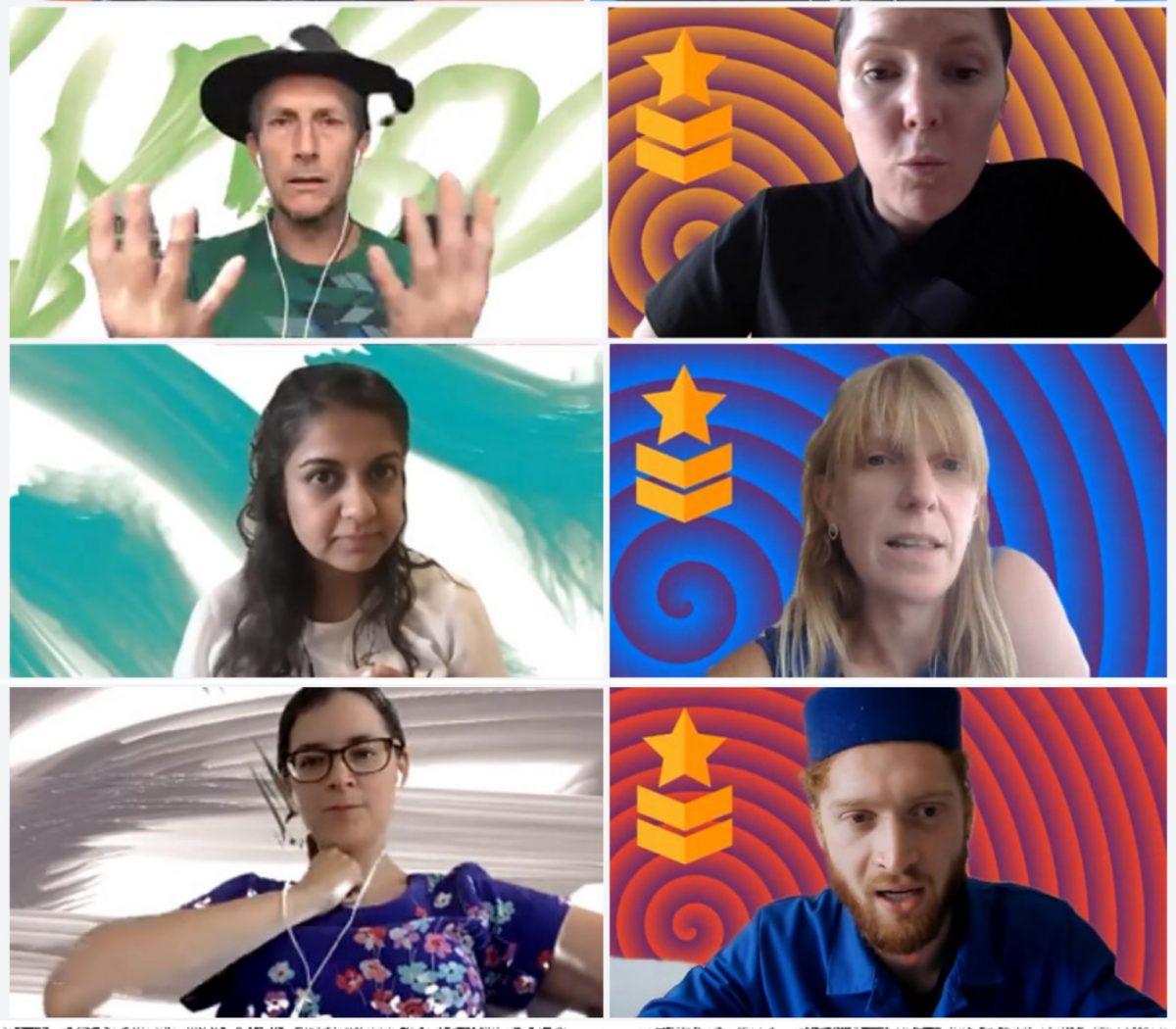
This blog is part of an online dialogue conducted with Nathan Jones.
It begins here:'Performance Writing' FB account
And continues here: http://www.furtherfield.org/blog/nathan-mercy/networkwriting
[Draft introduction 2] This paper sets out to collaboratively explore the notion of a performance writing network. With Nathan Jones of Mercy Online, we will use the act of writing inside the social network, blogosphere and listserv (always aware of this mode as the stage which turns every gesture into a kind of performance) to unwind a series of interconnections and complications implicit in ‘performance’, ‘writing’ and ‘the network.’
Starting from Michel Serres’ formulation in The Parasite (1982)of a “network of waves”, “trenches”, “chains” and/ or “bifurcations”, whose nodes are in a sense aberrations which bifurcate, but also act to collapse dichotomies, we will explore the manifestaions and possibilities of performance and writing in relation to a network of ideas, communities and/ or technologies.
[Note to Nathan: Can you expand on what you have written previously: “The limit of the network in this sense exists as nothing more than a provocation for transcendence.” Does this mean that the limit of the network is a provocation for transcendence? I.e. the limit is a reminder of the futility of transcendence – it has a provocative relationship with it? Or does this mean that the fact the network is limited breeds the aspiration of transcendence? The aspiration to keep growing and pushing beyond the network, even though it’s impossible? Or perhaps to disappear within the network, to be immersed, to belong to it somehow?]
[INSERT DEFINITION OF PERFORMANCE WRITING: delete or insert as applicable: writing which performs/ writing which performs self consciously/ acknowledges its place in the world/ works for a living/ writing which begins with a capital P/ ends with a silent w/ something collaborative/ something networked/ something that belongs elsewhere/ an academic discipline/ a movement/ an artistic practice/ a play on words/ a joke/ a conceptual joke/ a practical joke/ an idea spelt out in borrowed words/ an idea chalked onto the pavement/ an idea chalked onto the idea of a pavement …]
[REFERENCE AGAMBEN: Giorgio Agamben’s The Coming Community (1993) suggests a model for community that does not imply shared values. In her essay on criticality, “Looking Away: Participations in Visual Culture” (2006) Irit Rogoff evokes his argument to ask, ‘How can we think of a community whose collective basis is neither the shared ideological principles nor the empathies of affinity and similarity?’ Agamben’s answer is a ‘coming community’ that is ‘whatever being’: ‘Whatever singularity has no identity, it is not determinate with respect to a concept … it is determined only through its relation to an idea, that is, to the totality of its possibilities.’… Is this a model for a performance writing network? Is this a model for networked behaviour that exists in a landscape of digital excess? What does it take to be part of the network?]
[Note to Nathan: I’m wondering if network is the right way to think about this network. Network implies something that can be comprehended, visualised or mapped. But performance writing (and Performance Writing) is not untinged by power – in all the normal ways, of course (the academy, the funders, the funded, the fashionable), as well as some particular ones, I’m sure (although I might not be the right person to ask: I have no discernible power, only this keyboard and a few invitations to my name) – and this means that a lot of its workings are hidden. The act of mapping, where it exists, brings the network into being – like the Performane Writing weekend at Arnolfini where we met, or through the academy, or perhaps through what you do and what I do when we work ( if it works). Or have I misunderstood the network? I am only a user, after all. I have the uncanny feeling of grasping at the wrong tools, and I think I can hear some people yawning, ostentatiously. Have I fallen into the trap? Well, whatever. I read this recently: As always, when defining the boundaries between chaos and order, we are limited by language. Is any dynamic artist, designer or scholar ever comfortable or satisfied with a label for their research, beyond the most general? ... Already, some reading this are making notes for a rebuttal that denies that these fields are even remotely related.]
[Note to Nathan: Where does reading come into this?]

Comments
Nathan's response
http://www.furtherfield.org/blog/nathan-mercy/networkwriting